
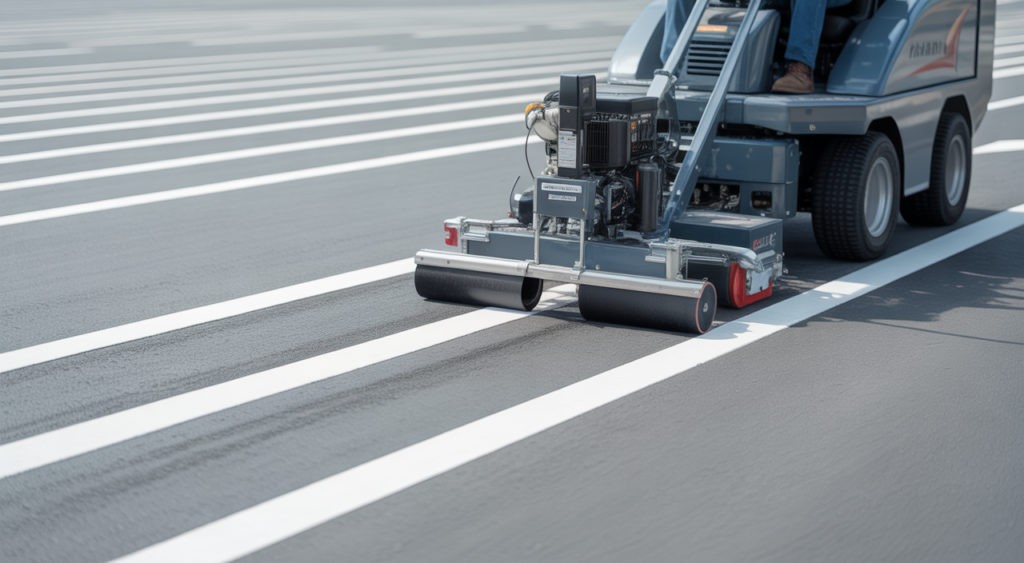
Ultimate Guide to Line Striping Machines: Choose, Operate & Maximize ROI

What are Line Striping Machines and how do they help your business?
Line Striping Machines are used to paint clear, straight lines on parking lots, roads, warehouses and sports grounds. If you take care of commercial or residential property, clean markings keep traffic smooth, safe and compliant with local rules. For sharp symbols and arrows, you also need quality stencils, and that is where professional parking lot stencils from Line Striping Machines support perfect results.
In India, more malls, offices and housing societies are investing in better parking layouts. Clear lines mean more cars parked in the same space, fewer disputes and a better visitor experience. With the right machine and stencils, you can complete jobs faster, reduce labour cost and build a strong striping business.
This guide explains different types of Line Striping Machines, key features, costs, maintenance and simple tips to increase your return on every rupee you invest.
Understanding Line Striping Machine Types
Before you buy, you should know the main categories of pavement marking equipment. The right choice depends on project size, budget and how often you stripe.
Walk-behind vs Self-propelled
Walk-behind line painting machines are pushed by the operator. They are ideal for small to medium parking lots, housing societies and school campuses. They cost less, are easier to store and suit contractors who are just starting out.
Self-propelled stripers move on their own using a drive system. The operator mainly steers and controls paint flow. These are better for large industrial parks, municipal roads or regular contract work, because they save time and reduce fatigue.
- Choose walk-behind for fewer projects and tight spaces.
- Choose self-propelled if you need speed and cover many sites every month.
Electric, Gas & Battery-powered Options
Gas-powered line marking machines offer high power and suit heavy-duty use. They work well in open outdoor areas but are louder and require more engine care.
Electric or battery-powered stripers run more quietly and are better for warehouses or campuses where noise and fumes matter. They usually cost a bit more upfront, but fuel savings can balance this over time.
For many Indian contractors, a fuel-efficient gas model is still the most practical choice for outdoor work, while a compact electric traffic line marker works well inside factories or basement parking areas.
Key Features to Compare Before Buying
Beyond the power source, some technical features strongly affect performance, finish quality and comfort.
Paint Pressure, Flow Rate & Nozzle Sizes
The paint pressure controls how strongly paint is pushed out. Higher, stable pressure gives a solid, even line. Flow rate tells you how much paint comes out per minute, which affects speed and coverage.
Nozzle size decides the thickness and texture of the line. Interchangeable nozzles let you adjust for different surfaces and paint types. For most parking lots, a medium nozzle with good atomization (fine spray) works best.
Line Width Adjustability & Speed Control
A good line painting sprayer lets you adjust line width quickly, for example from 2 to 6 inches. This helps when you switch between car bays, arrows and border lines.
Speed control is also important. If the machine moves too fast, lines can become light or broken. If it is too slow, you waste time. Look for clear speed settings and a stable wheelbase to keep your lines straight.
Warranty & Service Support
In India, easy access to spare parts and service centres is crucial. Check:
- Warranty period on pump, engine and frame.
- Availability of local service partners.
- Clear user manual and training videos.
Simple accessories such as a reliable airless spray gun extension can further improve comfort and reach.
Total Cost of Ownership: Look Beyond the MRP
Many buyers focus only on the purchase price, but long-term cost matters more. Think in terms of three major areas.
Upfront Cost & Financing
Entry-level pavement striping equipment for small jobs can be more affordable, while high-output road marking machines will sit at the premium end. If you handle regular contracts from builders or institutions, a higher upfront price may still pay off quickly through faster work.
Some dealers offer EMI options or seasonal discounts. Plan your buying around your busy season to recover the investment faster.
Paint & Maintenance Expenses
Quality striping paint costs more, but it lasts longer and reduces rework. You will also spend on filters, hoses, lubricants and occasional pump or nozzle replacement.
Set aside a small monthly budget for preventive care. A well-maintained machine easily runs for many years and keeps your per-job cost low.
Labour & Operating Cost
A faster, stable machine can cut job time by 30–40%. This saves labour and allows you to finish more projects each month. For property managers, an efficient unit means less downtime in parking areas and happier tenants.
When you compare Line Striping Machines, estimate how many lots or kilometres you will stripe in a year. Then calculate cost per bay or per metre, including paint, labour and machine wear.
Maintenance Best Practices & Simple Troubleshooting
Regular care is the secret to smooth performance and fewer breakdowns.
Daily, Weekly & Seasonal Checks
- Daily: Clean spray tip and filters, check hoses for leaks, wipe off paint from wheels and frame.
- Weekly: Inspect pump pressure, tighten loose bolts, test spray on a sample area.
- Seasonal: Change engine oil (for gas units), check battery health, store the machine in a dry space.
Cleaning & Nozzle Replacement
Flush the system with suitable cleaner after each job, so paint does not dry inside. Keep a few spare nozzles and filters on hand. When lines start looking fuzzy or uneven even after cleaning, it is usually time to change the nozzle.
Common Issues & Quick Fixes
- Lines are broken or light: Check paint level, pressure setting and nozzle clogging.
- Machine pulls to one side: Check tyre pressure and wheel alignment.
- Spray pattern is uneven: Clean or replace the spray tip and check filter blockage.
Boosting Precision with Parking Lot Stencils
Even the best road striping tools need help to paint symbols, arrows and text uniformly. That is where good stencils make a big difference.
Why Use Professional Pavement Stencils?
Stencils save you time, keep markings consistent and support compliance with local parking rules. They also help new crew members produce the same quality as experienced staff.
When paired with a stable machine and correct nozzle, stencils reduce paint waste and prevent overspray, keeping your work neat and professional.
Installation Tips for Accurate Alignment
Clean the surface well before placing the stencil. Use masking tape or small weights to hold it firmly, especially on windy days. Spray from a steady distance and angle, lifting the stencil only after the paint has settled.
For extra accessories such as high-visibility safety gear, you can explore options like reflective workwear for on-site crews to keep your team visible around moving vehicles.
Buying Guide: Matching Machine to Job Size
Here is a simple way to choose:
- Small lots & housing societies: Compact walk-behind line painting machines, possibly electric, with basic adjustable width.
- Medium commercial spaces: Strong walk-behind or light self-propelled unit, gas-powered, with quick-change nozzles.
- Heavy-duty and municipal use: High-output self-propelled or ride-on thermoplastic striping machine with strong warranty and service network.
Always test a demo unit if possible, check how easy it is to control the gun, adjust pressure and clean the system.
Conclusion
Well-chosen Line Striping Machines can transform how you manage or service parking lots, roads and industrial spaces. When you look beyond price and focus on features, long-term cost and maintenance, you build a more profitable, reliable operation.
Combine a stable, efficient machine with durable paint and professional parking lot stencils, and you will deliver crisp, attractive markings that keep drivers safe and clients satisfied for years.
FAQs
Q1. How often should I repaint parking lot lines in India?
Most busy parking lots need repainting every 12 to 24 months, depending on traffic, weather and paint quality. Areas with heavy truck movement or strong sun may need touch-ups sooner.
Q2. Can one machine handle both road and warehouse striping?
Yes, many pavement marking machines can work on both outdoor asphalt and indoor concrete. You may need different paints and nozzle sizes, and in closed spaces it is better to use electric or battery models to avoid fumes.
Q3. Is training required to operate a line striping machine?
Basic training is strongly recommended. With a short session on pressure settings, walking speed and cleaning, even new operators can produce straight, consistent lines and extend the life of the machine.

Kristy Blanchard is a Kansas-based writer and blogger. She has a passion for writing and exploring different cultures. She has a degree in English Literature and is currently studying marketing. She spends her free time exploring Kansas and always has a new story to tell. She loves to share her experiences in her blog, where she writes about everything from fashion and food to travel and culture.


